What the term means
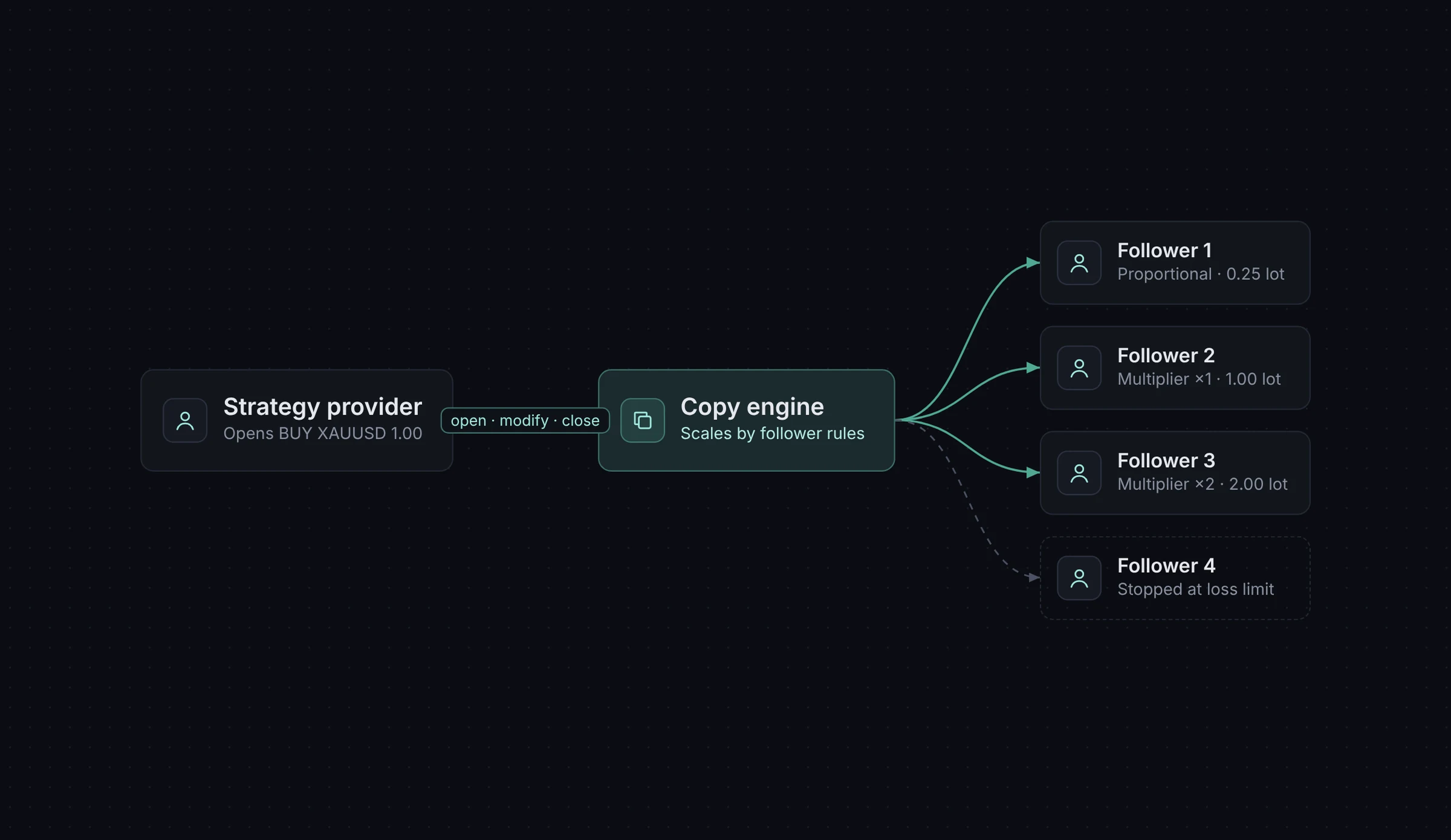
Copy trading has three roles. The strategy provider, sometimes called a master or signal provider, trades their own account. The follower, or investor, chooses to copy that provider. The broker runs the platform, holds both accounts and sets the rules.
The software is the engine that watches the provider’s account and reproduces each action in follower accounts. It usually comes with a showcase where followers browse providers and a dashboard where they manage subscriptions.
How it works
- A client applies to become a strategy provider, and the broker approves them.
- Followers browse provider profiles and their trading history.
- A follower subscribes and chooses an allocation method and limits.
- The provider opens a trade. The engine detects it and opens scaled trades in follower accounts.
- Changes, such as stop loss edits or partial closes, are copied the same way.
- When the provider closes the trade, followers’ trades close too. Fees are calculated by the broker’s rules.
Common allocation methods
| Method | How the follower’s size is set |
|---|---|
| Fixed lot | Every copied trade uses the same lot size chosen by the follower. |
| Multiplier | The provider’s lot size times a factor, such as 0.5 or 2. |
| Equity ratio | Scaled by the ratio of follower equity to provider equity. |
| Fixed amount | The follower allocates a set amount of capital to the provider. |
Names and options vary between products. Rounding to the minimum lot size can make small follower accounts behave differently from the provider.
Risk controls
- Follower limits: maximum loss, stop copying at a drawdown level, maximum lot size.
- Broker limits: which groups and symbols can be copied, maximum followers per provider.
- Provider approval and the ability to suspend a provider.
- Slippage handling, since followers may fill at different prices from the provider.
- Clear disclosures shown before a follower subscribes.
What to look for
- How quickly and reliably trades are copied, and how missed copies are handled.
- Which allocation methods and fee models are supported.
- Which risk limits the broker controls versus the follower.
- How provider statistics are calculated and displayed.
- Whether every copy action is logged for audit and disputes.
- How the software connects to your MT5 server.
Copy trading is regulated differently across jurisdictions. Check the rules that apply to your licence with your legal advisers before launch.
How XFIV relates
XFIV Copy is copy trading for MT5 brokers with broker-side risk controls. It runs on the broker’s own MT5 setup through XFIV Connect. See the XFIV Copy product page for details.
Frequently asked questions
Is copy trading the same as social trading?
They overlap. Social trading usually adds feeds, comments and following. Copy trading is the automated replication of trades.
Can followers lose money copying a profitable provider?
Yes. Past performance does not guarantee future results. Followers can also get different fills from the provider because of timing, slippage and lot rounding.
Who sets the copy trading fees?
The broker defines the fee models allowed, and providers often choose their fee within those limits.
Does copy trading software need its own platform?
Not always. Many products, including MT5-based ones, copy trades between accounts on the broker’s existing server.